

This is an excerpt from the introduction to a 1993 published version of Purlie Victorious. Playwright and activist Ossie Davis reflects on writing the play and the fallout among his fellow activists and members of the Black community.
Though Purlie Victorious was a comedy aimed at America’s funnybone, it was dead serious in its purpose: to point a mocking finger at racial segregation and laugh it out of existence! But there were others—white and black, friends and colleagues, beloved and respected—who were vehement in their opposition to the play, which they felt in many ways to be condescending if not demeaning. To them, we Negroes were locked in a life and death struggle against white, bigoted, Jim Crow oppressors. The cause was serious, and laughter was the last thing we needed at a time like this—bad for morale, and definitely out of order. White folks already looked upon us as a race of clowns, incapable of acting like men, and that was a part of the problem. What we needed from the theater was not buffoons, but heroes hurling invectives, like Frederick Douglass and Patrick Henry. A play with characters speaking manfully of our anguish, who would inspire us, like Churchill at Dunkirk, and lead us into battle—raging, angry, bitter and unbending, warning white America, as David Walker had done way back in 1929, that this time we meant to have our freedom by any means necessary. If that meant killing and being killed, so be it.
To them humor was not a weapon; it was rather a confirmation of our cowardice—our lack of manly resolve and self-respect in the face of the enemy. Laughter, except as shared between black and whites based on mutual respect and understanding, was unacceptable. This was war.
I knew the feelings well—the smoldering rage, the resentment of a people continually mocked, insulted, cheated, lied to, ignored, ridiculed, assaulted and killed. I had grown up a black boy in the South, and there was no racial indignity, except lynching and the chain gang, that had passed me by. I, too, was sick of it. My rights as an American and as a man always deferred, if not denied. I, too, had watched with horror what was happening on television and in the headlines. Anger and vengeance—an eye for an eye, and a tooth for a tooth—seemed very much in order, and I was full of it. And that was exactly the kind of play I set out to write. But a funny thing happened on the way to production.
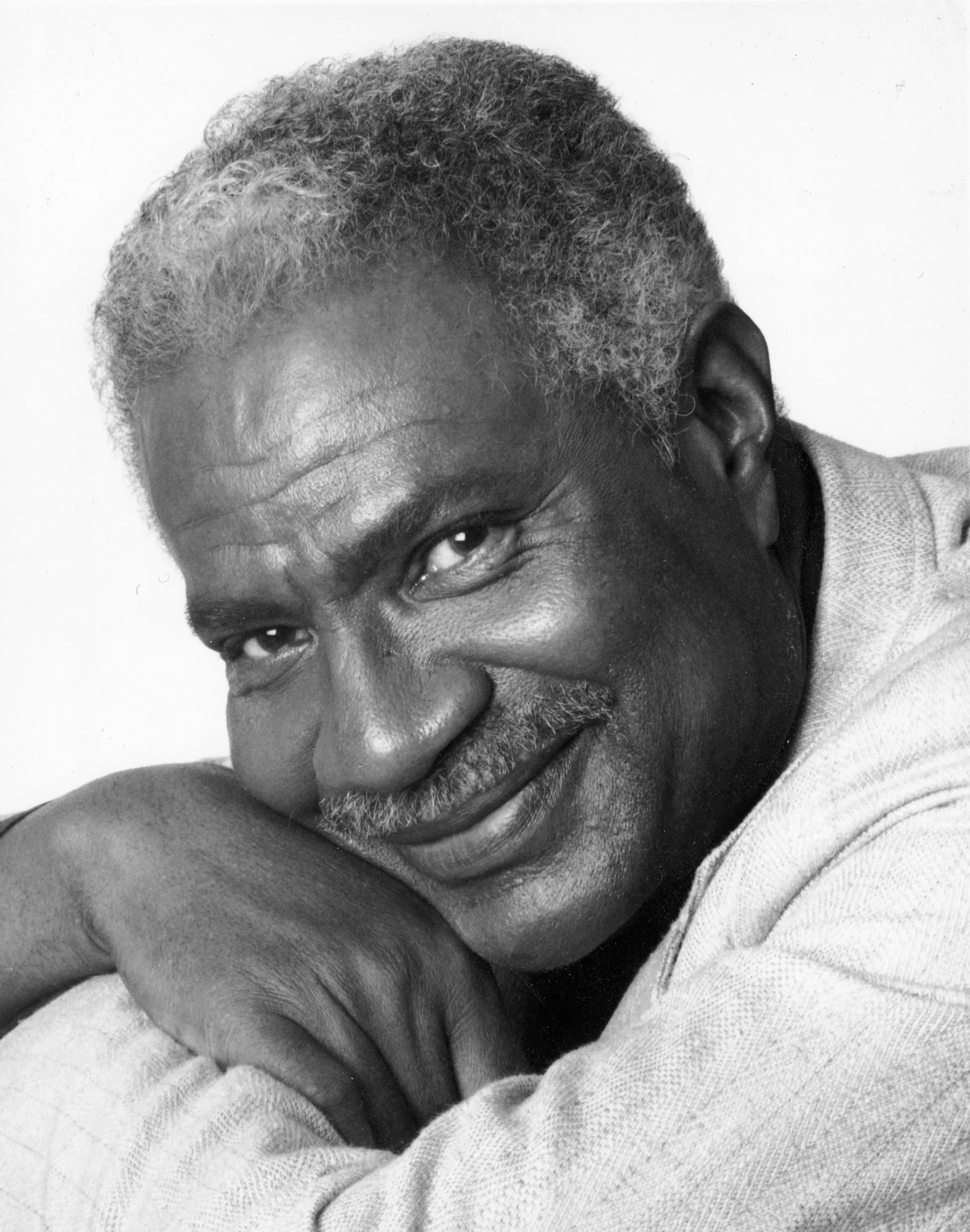
The idea for what eventually became Purlie Victorious first entered my mind…at a time when the 1954 Supreme Court decision against school segregation had been answered….by the lynching of Emmett Till, a fifteen-year-old black boy, by two white men in Money, Mississippi, for allegedly whistling at a white woman.
Having grown up in Waycross, Georgia, I felt particularly anguished. It awoke in me a deep and private hurt, stemming from an incident that had happened long ago when I was a very young boy. One day after school I was picked up by the police for no reason whatsoever and taken down to the station house. I was not arrested. Momma was never notified, and I was never threatened. There were just some word games and plenty of fun at my expense. Then one of the policemen poured syrup on my head. They laughed, and I laughed too. Then they gave me some peanut brittle to eat and turned me loose. I don’t remember being scared or angry. Maybe it made me feel special that these white men would take the time to “play” with a little colored boy.
I probably washed out the syrup by sticking my head under the pump in the yard when I got home. Maybe I went to the swimming hole laughing and going on about my business. I don’t remember that part of it. I only remember that my six or seven-year-old mind knew that what happened at the police station that day wasn’t innocent—wasn’t fun.
Deep down in the recesses of my heart I knew. I had been violated, mocked, insulted, and humiliated. I knew it, even if I didn’t know how to share it with anybody, not even Momma, and certainly not my father. It rankled. It left a question mark. It became my sin against myself of which I grew secretly ashamed.
Over and over during the years, I play the moments back in my mind trying for a different ending, with me feeling heroic this time. What happened that day, Emmett Till, and so much else of my life I brought to the writing of the play. And so it was after that work, I sat at the dining room table far into the night, pencil scratching loud and hard, venting my ancient fury, page after page after page. An eye for an eye for an eye, a tooth for a tooth for a tooth!
But in the cold light of day, when I set out to make revisions on what had spewed form my pencil like hot lava the night before, I was appalled. The facts were there, embellished freely by the storyteller’s privileged imagination. The passion was there, but all overblown and swollen. I didn’t believe a single word my characters were saying. No white folks could possibly be as mean and hateful, no black folks such hopeless, helpless victims. I read it aloud and found it hard to keep myself from laughing.
Still, night after night, spurred by what was constantly in the news, I wrestled with my cast of characters, trying to make them behave. But the closer I got to the facts hiding in my memory, the more ridiculous they became in retrospect. I finally gave up on the theatric vengeance. Forgot my high resolve to punish all white folks and just wrote. I let the characters take the play in hand and follow their own fates. Little by little, they began to reveal such inner lives and motives as was totally unexpected. I began to see them and appreciate them in a totally different way.
Gone now was the protest play I had promised myself, the memory of the little boy with a crown of lukewarm syrup, vengeance for Emmett Till and rage against the white oppressors. In its place was a new play with a whole new cast of characters, drawn from my own precious childhood memories of black life in the Cottonpatch, sprinkled with folktales and fables, sermons and storytelling……
Over the more than five years it took to complete the play, and after it opened in September 1961, Ruby and I not only saw the struggle, we were right in the thick of it. We saw the brutality, the violence, the mutual rage and hostility day by day. There we were marching, demonstrating, meeting, strategizing, debating, raising funds for the Student Nonviolent Coordinating Committee and later for the Black Panthers; writing and performing skits and sketches about the struggle at schools, churches, synagogues and at street corner rallies. Then every night the two of us returned to Broadway and to Purlie Victorious. It never occurred to me that what we did by day and what we did by night was not one and the same thing. But some critics saw things differently and accused us of treating the struggle and the people involved in it as a joke.
I had little time, and no inclination, to respond to such criticism. I didn’t know what to say or how to say it. I swallowed my own doubts in the general wide and appreciative acceptance of the play. But now, these many years after opening night, the question again stands before me: not so much whether the play was a joke, but whether, given the war-like tenor of the times, the joke was out of order. Did I betray the struggle by implying that the whole affair was ridiculous? Was not being able to keep a straight face a form of treason? Was laughing by night at the very things I marched against by day a defect of character?
In retrospect, I think not. There must be a reason why we humans are the only animals blessed—or cursed—with the gift of laughter, a reason that would also explain how and why a dramatic idea drawing its inspiration from personal fire and anger, resentment and hostility turned—as if by its own will—into a rearing farce which sent people, white and black way from the theater laughing instead of cursing.
Where, finally, does a playwright get the plot and the characters from which to people his fancy, and hence his theater? A playwright’s ideas, characters and events come with their own truth and verification. Purlie Victorious came to me from the culture of the Cottonpatch, a place that no longer exists except in memory. Most of the habits and folkways and social customs that now inform black culture had their foundation in that poor, rural, oppressive environment. Though slavery was dead, our life in general was tied to agriculture and the ol’ plantation. Our songs, our dances, our religion, our education, our politics—most of all our culture sprang from that common source… It was a common thread that ran from community to community stretching all the way back to slavery and holding us all together, enabling us to call ourselves a people… It was what separated us from the rest of America, and had a lifestyle all its own, handed down from one generation to the next…
My parents and the culture of the world they gave me had a mighty hand in creating Purlie Victorious Judson. No people in America had a more atrocious life than my parents and their parents, a life of poverty, of fraud, of lynchings, of insults, of justice continually denied. Yet they never told these horrors without laughing at them. We know now they laughed to keep from crying…
Life in the Cotton Patch is finally over.
Segregation as public policy is forever ended, but the struggle continues. I like to think that somewhere beyond time and space, and all things mundane, there is a kingdom where fools can go when the world no longer needs their sage advice, their scalding satire, or their healing laughter. Where we, too, may visit once in a while, if only in our dreams and our imaginations…
Purlie belongs to the sunset of an era. In that regard, perhaps a part of my motivation must have been to take a brief look backwards in hope of catching one last glimpse. A bad time, a rough time, those racist years… And yet out of those years grew much that was irreplaceable. A mean world, full of pain, atrocity and horror, yet for many of us it was all the world we knew.
I hope when collection time comes, and I am repossessed, the Reverend Purlie Victorious will come and bring the eulogy. He’ll be long-winded of course, but I won’t mind. All I’ll have to do is lie back in the narrow, wooden walls of my final confinement and listen to Purlie telling lies again, this time about me, putting me right up there with ol’ Bre’r Rabbit and High John the conqueror, still my heroes, still my role models.
How I shall love it, and laugh and laugh and laugh.